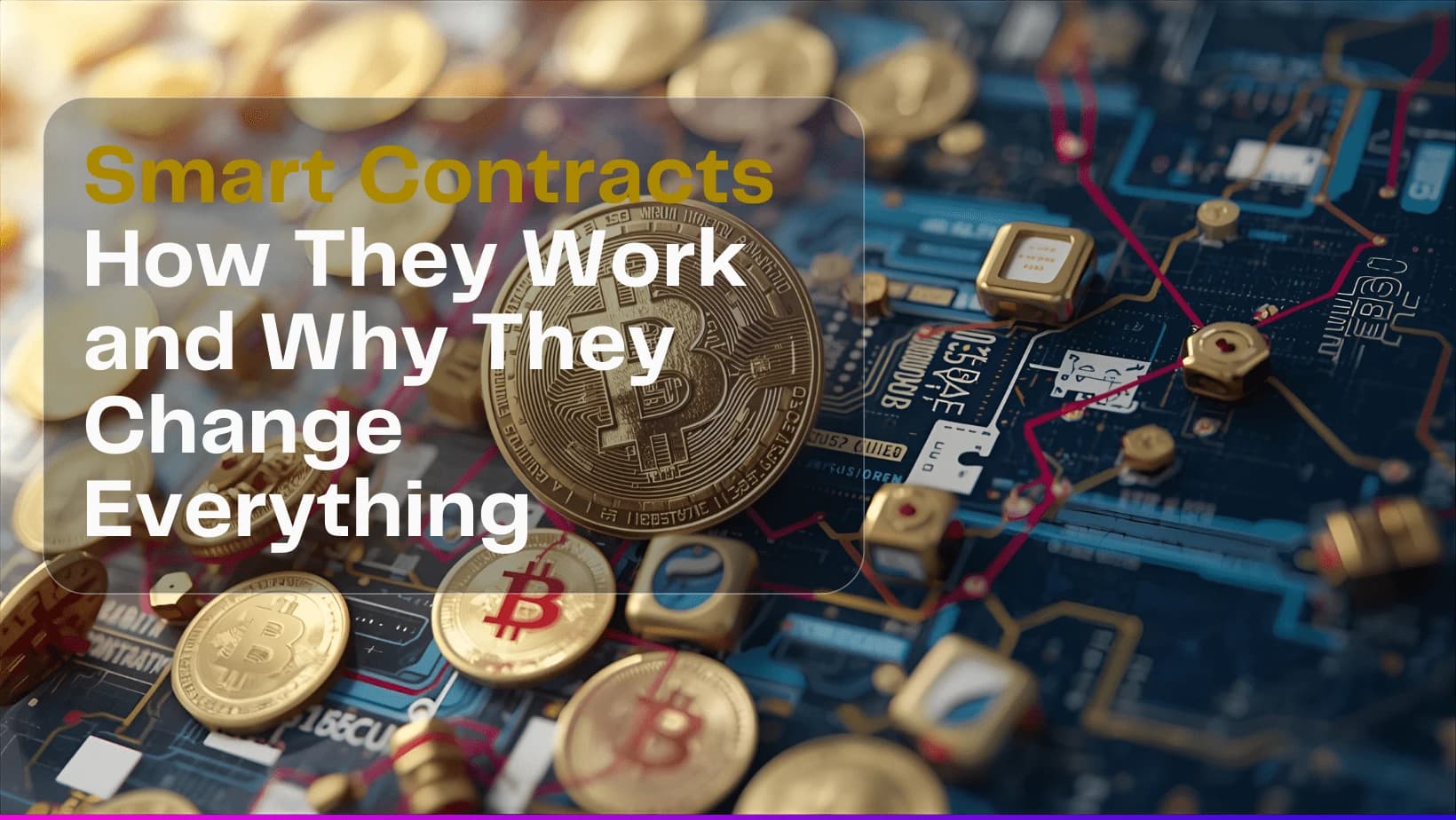
Smart contracts are everywhere in the crypto ecosystem. From DeFi to NFTs, and blockchain games, they automatically execute actions without intermediaries. Yet, their functionality remains unclear for many investors.
In this SEO guide, we explain what a smart contract is, how it works, its real-world uses, and the key risks and precautions you need to know. Perfect for beginners and investors who want to understand crypto better.
What is a Smart Contract?
A smart contract is a computer program stored on a blockchain. It executes automatically when predefined conditions are met.
In short:
- no paperwork to sign,
- no third-party validation,
- no human decision once deployed.
The principle is simple: "if X happens, then Y executes".
Basic example: If a user sends 1 ETH to the contract, the contract automatically transfers an NFT to them.
Once deployed on the blockchain, a smart contract becomes:
- public (the code can be viewed),
- immutable (it cannot be changed),
- autonomous (it runs on its own).
How Does a Smart Contract Work?
A smart contract relies on four key components:
1. The Code
The contract is written in a specific language (like Solidity on Ethereum). This code defines:
- the rules,
- the conditions,
- the possible actions.
Once deployed on the blockchain, this code becomes the absolute law.
2. The Blockchain
The blockchain hosts the smart contract and ensures:
- its execution,
- transparency,
- tamper-proof operations.
Every interaction with the contract is recorded as a blockchain transaction.
3. Transactions
Users interact with smart contracts through transactions:
- sending funds,
- calling a function,
- triggering an action.
These transactions automatically execute the contract according to its predefined rules.
4. Oracles (The Bridge to the Real World)
By default, smart contracts cannot access external data (outside their blockchain), such as Bitcoin prices, sports results, or weather data.
Oracles are third-party services that fetch this external data, verify it, and deliver it securely to the smart contract.
Use case example: A decentralized insurance contract waits for data from an Oracle indicating whether a flight was canceled before automatically triggering the payout.
Current Uses of Smart Contracts
Smart contracts are at the core of most modern crypto applications.
🔹 DeFi (Decentralized Finance) In DeFi, smart contracts replace banks and financial intermediaries:
- lending and borrowing,
- staking,
- liquidity pools,
- decentralized exchanges (DEX).
Everything is automated without human intervention.
🔹 NFTs Smart contracts handle:
- NFT creation,
- ownership transfers,
- automatic royalties to creators.
Every sale or resale triggers the contract’s rules automatically.
🔹 Blockchain Games In Web3 games, smart contracts manage:
- rewards distribution,
- true ownership of items,
- transparent game rules.
Why Smart Contracts Are Transforming Crypto
Smart contracts aren’t just technical tools they change how trust is established.
✅ Fewer intermediaries No bank, notary, or central platform is needed to execute actions.
✅ Full transparency The code is public; everyone can verify the rules.
✅ Automation No human decisions, favoritism, or arbitrary delays.
✅ Programmability You don’t just transfer value; you program behaviors.
Limitations and Risks of Smart Contracts
Despite their advantages, smart contracts come with risks.
⚠️ Code is law, even if flawed A bug in the code can cause:
- fund theft,
- irreversible blocking,
- malicious exploitation.
The blockchain does not reverse mistakes.
⚠️ Audits aren’t a full guarantee Audited contracts are not necessarily flawless. Audits reduce risk but don’t eliminate it.
⚠️ Users remain responsible Interacting with a smart contract means accepting its rules without recourse.
Hence the importance of:
- understanding the contract,
- verifying the project’s reputation,
- never investing more than you can afford to lose.
Smart Contract Security: Key Takeaways
A smart contract does not automatically protect your funds. Security depends on:
- code quality,
- the blockchain used,
- your own vigilance.
Understanding smart contracts helps avoid many mistakes, especially when interacting with DeFi or emerging projects.
Smart contracts are the invisible backbone of modern crypto. They execute rules, move value, and automate entire systems. Understanding them, even as a non-developer, is essential for navigating the crypto ecosystem safely.